


When considering energy, we often envision burning fuels, spinning turbines, or solar panels in sunlight. However, Earth’s most significant source of energy is evaporation. Every hurricane, thunderstorm, and ocean current relies on water turning into vapor. Nature fully uses thermodynamics; the challenge is whether we can deliberately harness this natural energy process for human benefit.
A hurricane is essentially a heat engine that converts the energy from warm seawater into wind and motion through the processes of evaporation and condensation. As vapor ascends, it releases latent heat, which intensifies the storm. This natural process transfers gigawatts of energy every second, far exceeding the capacity of our global power grids. However, it occurs in a chaotic and destructive manner, with no control.
Imagine channeling this same energy cycle, not through chaotic storms, but using human-designed technology for a specific purpose. The core argument is that Thermodynamic Geoengineering (TG) could accomplish exactly that: redirect excess ocean heat into usable energy, cooling the planet and generating power at scale. The question is no longer whether we can borrow nature’s approach, but whether we can intentionally use it to manage Earth’s energy and climate.
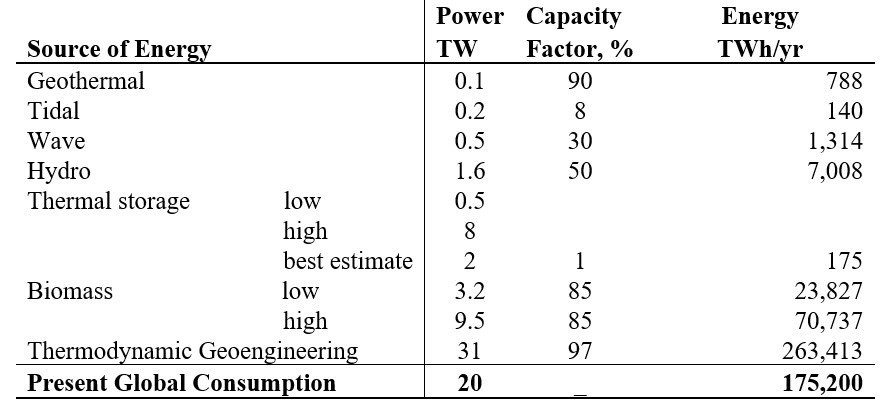
The table below shows what’s at stake. Currently, the world uses approximately 20 terawatts (TW) of energy, equivalent to roughly 175,000 terawatt-hours per year (TWh/yr). Even when combining all other renewable energy sources, hydro, geothermal, wind, and solar, they still can’t meet the growing demand at a reasonable cost when storage is needed for intermittent sources like wind and solar. However, the ocean contains over 250 times the heat we use annually. According to the table, Thermodynamic Geoengineering could produce 31 TW of stable power, surpassing global needs, while also reducing ocean heat that fuels hurricanes and sea level rise.
TG uses a controlled system with ammonia or perhaps even carbon dioxide, which boils at low temperatures just below the sea surface to absorb heat. The working fluid vapor drives turbines to generate electricity, efficiently mimicking the ocean’s natural energy cycle.
Evaporation occurs slowly at the water’s surface. Using controlled boiling with the working fluid, TG more efficiently removes ocean heat, which also helps reduce sea level rise and hurricane fuel while generating electricity.
The potential is enormous. The table shows that Thermodynamic Geoengineering could produce 263,000 TWh/yr, enough to power the world many times over. For comparison, hydroelectric power generates 7,000 TWh/yr and biomass produces 24,000 TWh/yr. Even with careful estimates, TG surpasses every other base load renewable energy source. It also offers something unique: it cools the climate by extracting heat from the ocean.
The concept reimagines climate action. Instead of just reducing emissions to slow global warming, it proposes actively removing harmful heat from oceans and generating electricity in the process. TG directly tackles the real issue: the energy that’s already causing sea levels to rise and storms to intensify. What if we could produce electricity and cool the planet at the same time? That’s the main argument of this approach.
Detractors argue that the concept is unrealistic or that it attempts to overly control nature. However, nature already demonstrates what’s possible. Every hurricane shows that the ocean and atmosphere can transfer huge amounts of energy. Thermodynamic Geoengineering simply proposes managing this process in a controlled, closed system, without pollution, burning fuel, or waiting for nature to resolve itself.
The economics are compelling. Each year, the world invests heavily in climate disaster recovery. If some of that spending shifted toward technology focused on removing excess heat, TG could potentially offset its own costs. The table suggests that power from TG could replace a significant portion of fossil fuel energy, creating a system where prevention offers financial benefits.
Building TG at scale, setting up deep-ocean systems, maintaining ammonia cycles, and protecting marine life will be a significant challenge. However, the core idea is physics-based; the oceans are already performing this work, and we simply need to help direct it.
In many ways, this could be the next step for humanity. We’ve learned to harness sunlight with solar panels, wind with turbines, and gravity with dams. The heat in the ocean is our planet’s largest untapped energy source, and it presents the next challenge. It’s also closely linked to our survival. If rising sea levels are like a planet with a persistent fever, then Thermodynamic Geoengineering could help cool things down while generating energy for society.
We can continue viewing global warming as a distant crisis, or we can address it as a solvable engineering challenge. TG turns risk into opportunity and waste into value, enabling us to move from helplessness to meaningful control.
After decades of absorbing our excess heat, it is time for the oceans to help power our future.